This article is based on publicly available IR materials and is not a recommendation to buy or sell any specific securities.
Note: Asahi Co., Ltd.’s fiscal year ends on February 20. This article covers the fiscal year ended Feb. 20, 2026, which japan-equity.com classifies as FY2025; the body, tables and segment data keep the company’s own labels (“FY ended Feb. 20, 2026” and “FY ending Feb. 20, 2027”). All figures are from the company’s English-language “Explanatory Material on Financial Results for the Fiscal Year Ended February 20, 2026” (April 3, 2026).
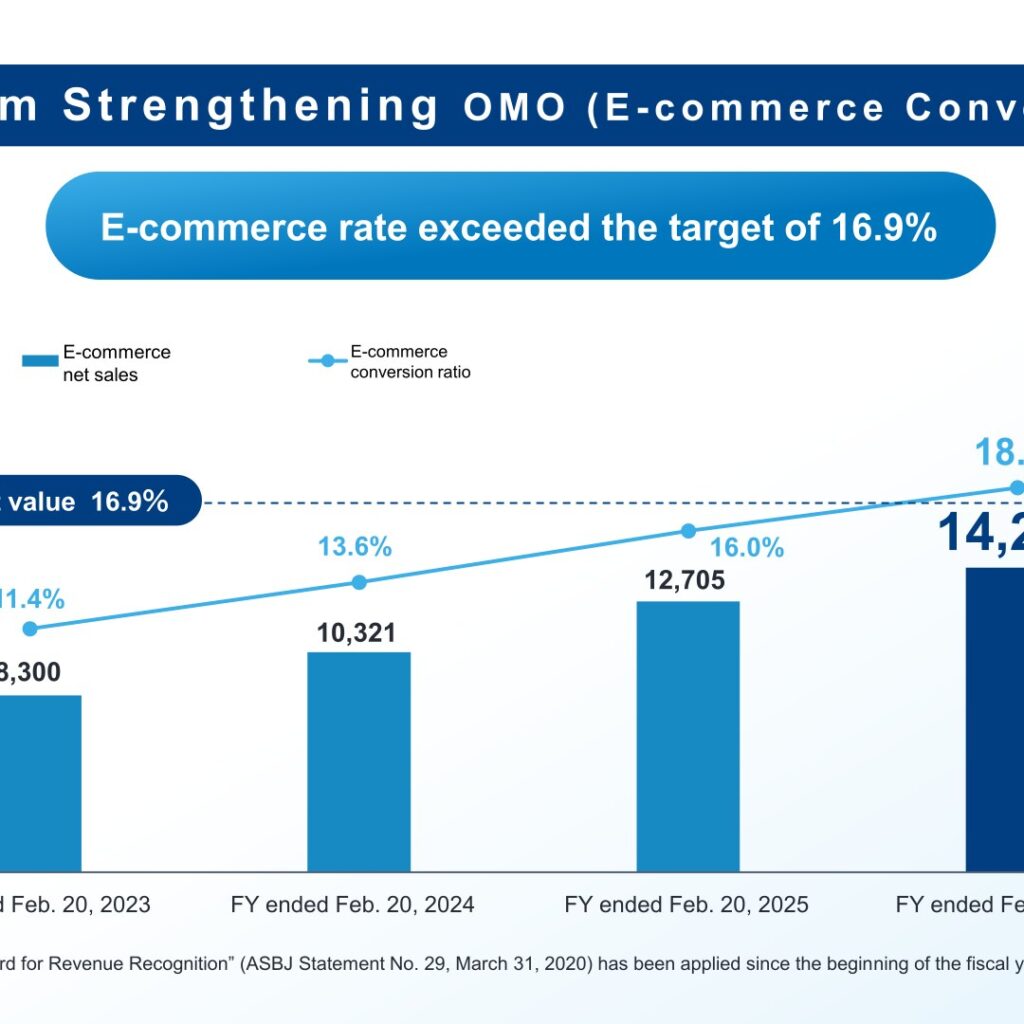
Asahi Co., Ltd., which operates the Cycle Base Asahi bicycle specialty store chain, reported net sales of 81,374 million yen for the fiscal year ended Feb. 20, 2026 (99.7% of the prior year), with operating profit of 3,937 million yen (71.8%) and profit of 2,268 million yen (63.8%). New bicycle sales were sluggish, but e-commerce sales grew on the strengthened OMO platform and sales of electric-assist bicycles were strong. The e-commerce conversion ratio reached 18.0%, exceeding the 16.9% target. For the fiscal year ending Feb. 20, 2027, the company plans net sales of 86,278 million yen and operating profit of 4,300 million yen, with a dividend of 50 yen per share.
Results for the Fiscal Year Ended Feb. 20, 2026
The fiscal year ended Feb. 20, 2026 was the final year of the Medium-Term Management Plan “VISION 2025.” The company cites a decline in consumer sentiment caused by rising prices, growing demand for switching to electric-assist bicycles with enhanced performance features and high unit prices, and a lengthening of the replacement cycle against a backdrop of growing interest in saving money.
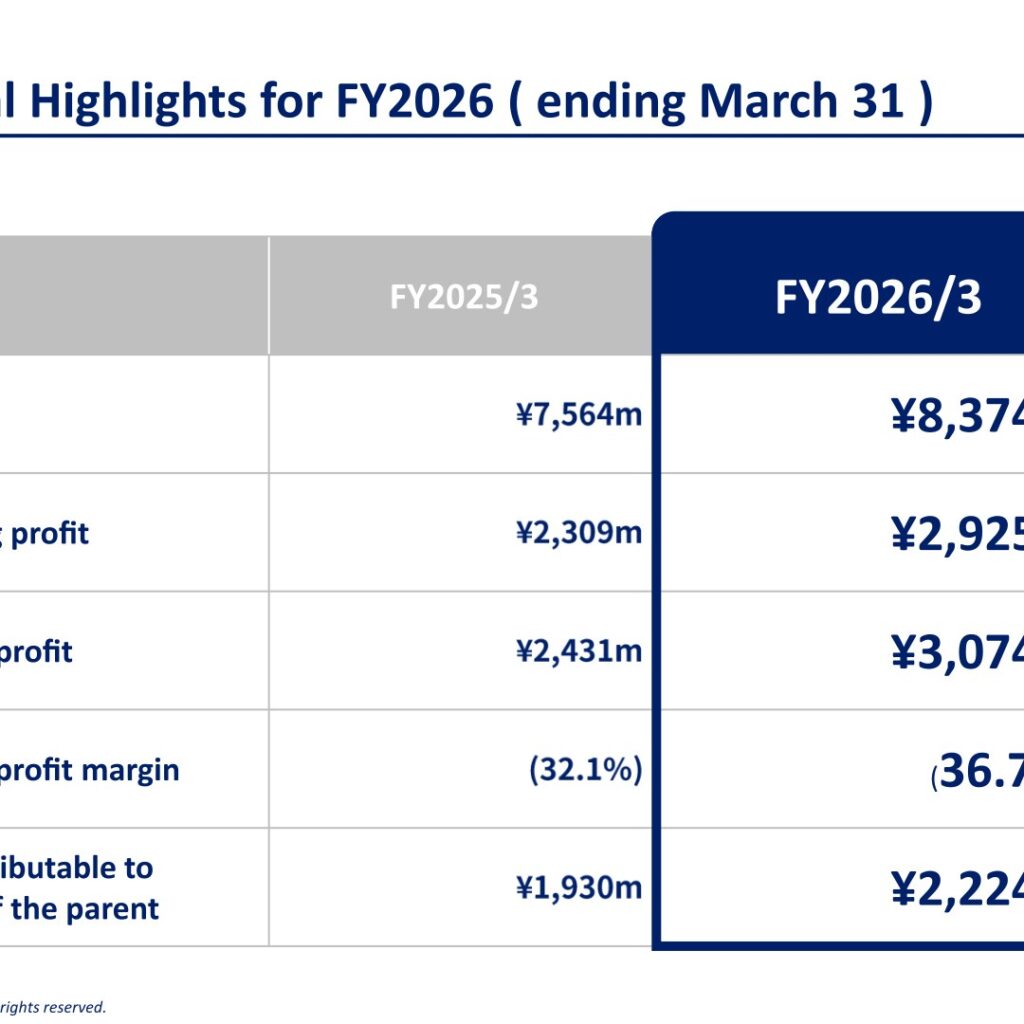
Net sales were 81,374 million yen (Y/Y 99.7%). Gross profit was 38,791 million yen (Y/Y 100.1%), with the ratio to net sales at 47.7% versus 47.5% a year earlier. Operating profit declined to 3,937 million yen (Y/Y 71.8%), which the company attributes to the decline in net sales. Ordinary profit was 4,169 million yen (Y/Y 74.1%) and profit was 2,268 million yen (Y/Y 63.8%).
| Item (millions of yen) | FY ended Feb. 20, 2025 | FY ended Feb. 20, 2026 | Y/Y change (%) | Comparison with plan (%) |
|---|---|---|---|---|
| Net sales | 81,593 | 81,374 | 99.7 | 100.5 |
| Gross profit | 38,739 | 38,791 | 100.1 | 99.5 |
| Operating profit | 5,485 | 3,937 | 71.8 | 93.1 |
| Ordinary profit | 5,626 | 4,169 | 74.1 | 94.5 |
| Profit | 3,555 | 2,268 | 63.8 | 85.9 |
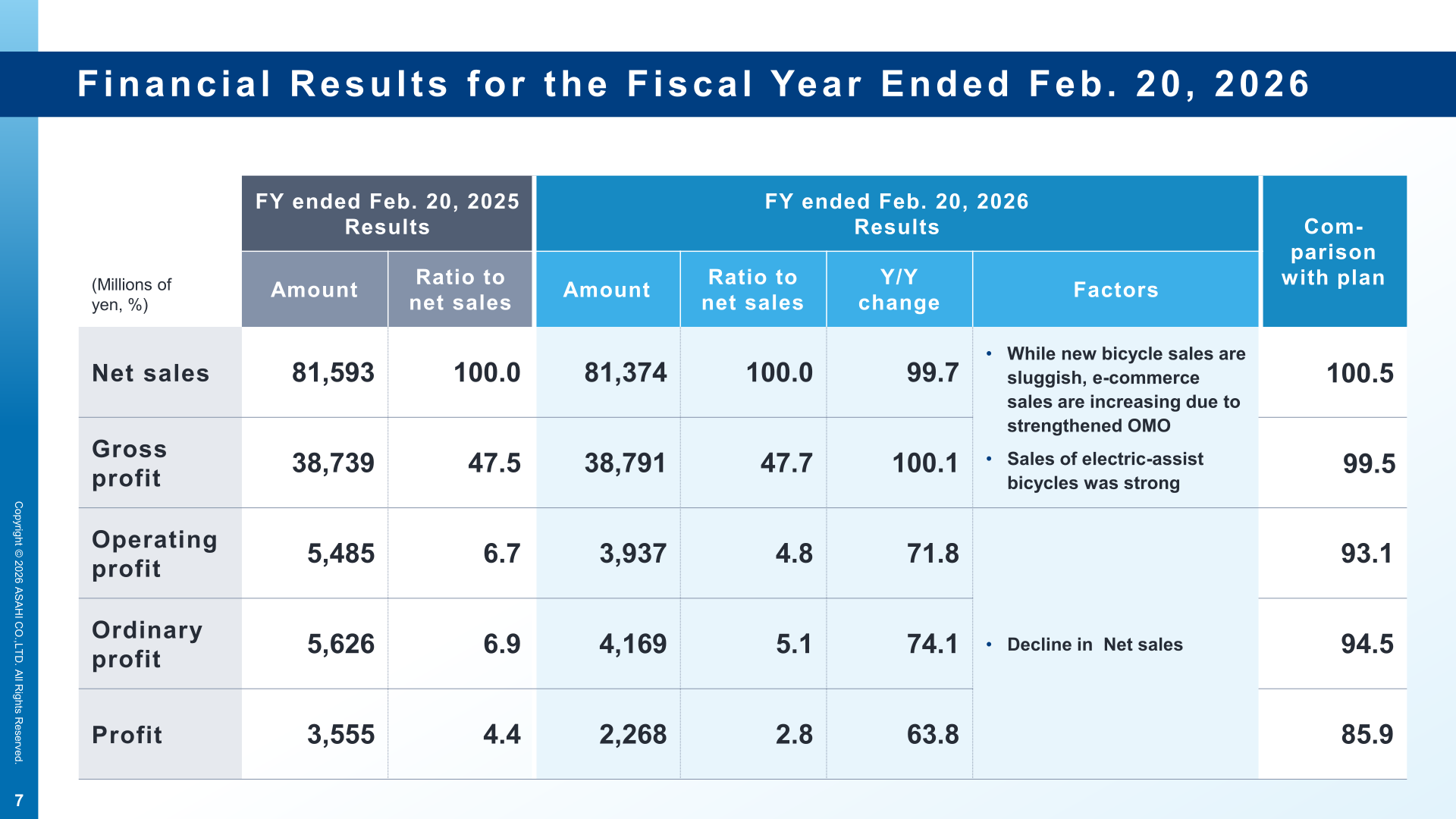
SG&A expenses rose to 34,853 million yen (42.8% of net sales; Y/Y 104.8%) from 33,253 million yen (40.8%). Personnel expenses were 16,673 million yen (Y/Y 105.0%) due to wage increases and business expansion, and depreciation was 1,840 million yen (Y/Y 109.0%) reflecting the replacement of core systems. Capital expenditures fell to 2,254 million yen (Y/Y 81.3%) on a decrease in investment in the Daito-cho office.
In the company’s operating profit bridge, operating profit moved from 5,485 million yen to 3,937 million yen: sales contributed -103 million yen (decrease in sales volume), changes in cost and product mix contributed 155 million yen (cost reduction; increase in repairs and parts), and changes in SG&A expenses contributed -1,599 million yen (wage increase, higher fixed costs from new store openings, and replacement of the core systems).
Against the full-year plan, net sales of 81,374 million yen exceeded the 81,000 million yen plan by 374 million yen, while operating profit fell short of the 4,230 million yen plan by ▲292 million yen and profit fell short of the 2,640 million yen plan by ▲371 million yen. The company cites a decline in gross profit margin (impact of sales measures and a higher sales ratio of electric-assist bicycles with low profit margin) and restrictions on reducing SG&A expenses, as a high proportion of fixed costs prevented a significant reduction over the short term.
Net Sales by Division and by Item
Store sales were 64,918 million yen (Y/Y 97.4%), while e-commerce sales rose to 14,290 million yen (Y/Y 112.5%), lifting e-commerce’s share of retail from 16.0% to 18.0%. The company notes the e-commerce share grew significantly due to the strengthened OMO platform. E-commerce net sales have risen from 8,300 million yen in the fiscal year ended Feb. 20, 2023 to 10,321 million yen, 12,705 million yen and 14,290 million yen, with the conversion ratio rising from 11.4% to 13.6%, 16.0% and 18.0%. The company’s estimated domestic market share was 25%.
| Division (millions of yen) | FY ended Feb. 20, 2025 | Retail share (%) | FY ended Feb. 20, 2026 | Retail share (%) | Y/Y change (%) |
|---|---|---|---|---|---|
| Stores | 66,643 | 84.0 | 64,918 | 82.0 | 97.4 |
| E-commerce | 12,705 | 16.0 | 14,290 | 18.0 | 112.5 |
| Retail (subtotal) | 79,348 | 100.0 | 79,208 | 100.0 | 99.8 |
| Other | 2,244 | – | 2,166 | – | 96.5 |
| Total | 81,593 | – | 81,374 | – | 99.7 |
| Market share (company estimate) | 25% | – | 25% | – | – |
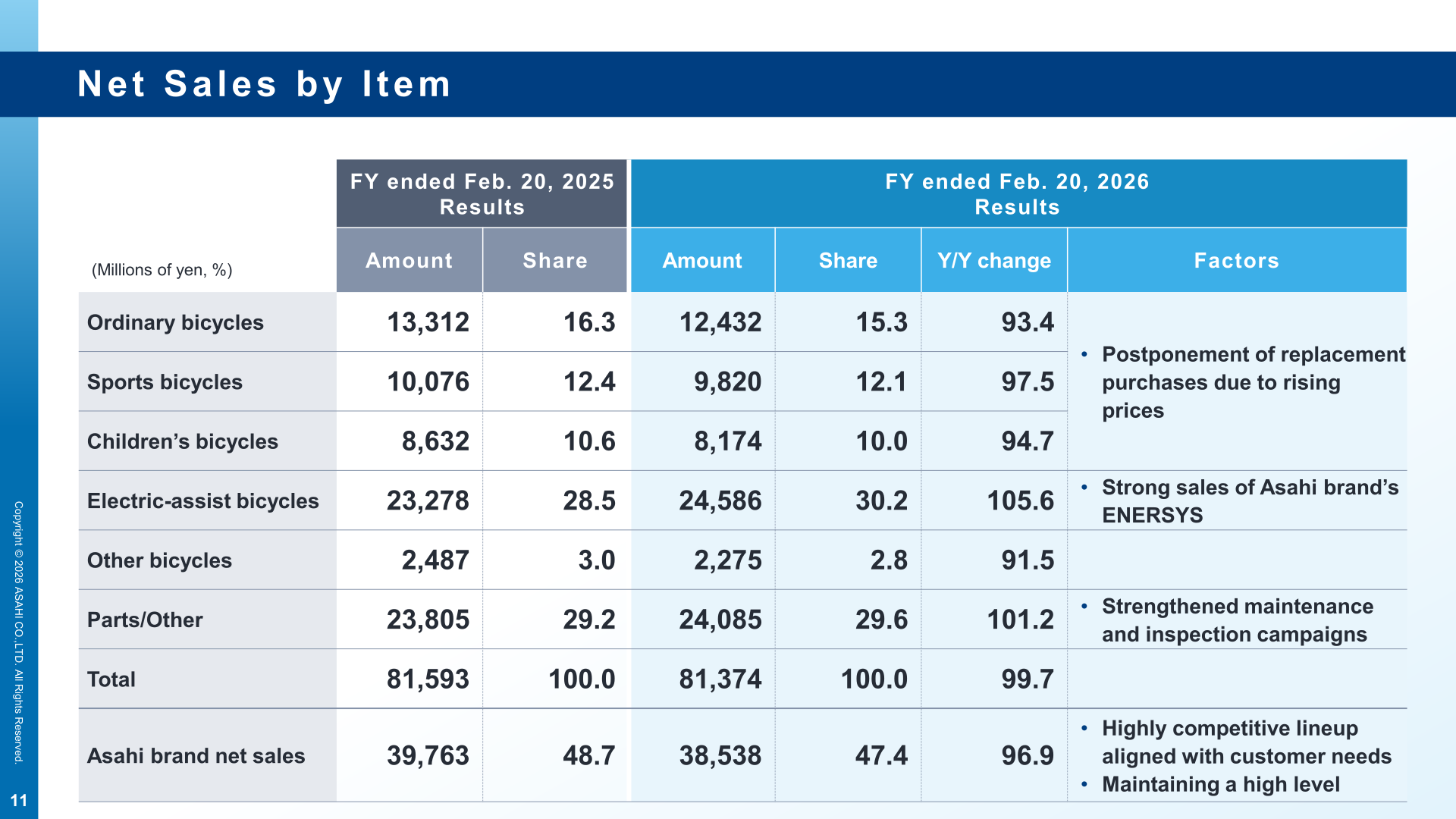
By item, electric-assist bicycles grew to 24,586 million yen (Y/Y 105.6%) on strong sales of the Asahi brand’s ENERSYS, and parts/other rose to 24,085 million yen (Y/Y 101.2%) on strengthened maintenance and inspection campaigns. Ordinary bicycles declined to 12,432 million yen (Y/Y 93.4%), which the company attributes to postponement of replacement purchases due to rising prices. Asahi brand net sales were 38,538 million yen, or 47.4% of the total.
| Item (millions of yen) | FY ended Feb. 20, 2025 | Share (%) | FY ended Feb. 20, 2026 | Share (%) | Y/Y change (%) |
|---|---|---|---|---|---|
| Ordinary bicycles | 13,312 | 16.3 | 12,432 | 15.3 | 93.4 |
| Sports bicycles | 10,076 | 12.4 | 9,820 | 12.1 | 97.5 |
| Children’s bicycles | 8,632 | 10.6 | 8,174 | 10.0 | 94.7 |
| Electric-assist bicycles | 23,278 | 28.5 | 24,586 | 30.2 | 105.6 |
| Other bicycles | 2,487 | 3.0 | 2,275 | 2.8 | 91.5 |
| Parts/Other | 23,805 | 29.2 | 24,085 | 29.6 | 101.2 |
| Total | 81,593 | 100.0 | 81,374 | 100.0 | 99.7 |
| Asahi brand net sales | 39,763 | 48.7 | 38,538 | 47.4 | 96.9 |
The store count rose from 545 to 557 as of Feb. 20, 2026, with 15 stores opened (5 in the first half and 10 in the second half) and 3 closed on the expiration of lease contracts. Urban stores increased from 11 to 14. The store count includes 18 franchise stores.
Plan for the Fiscal Year Ending Feb. 20, 2027
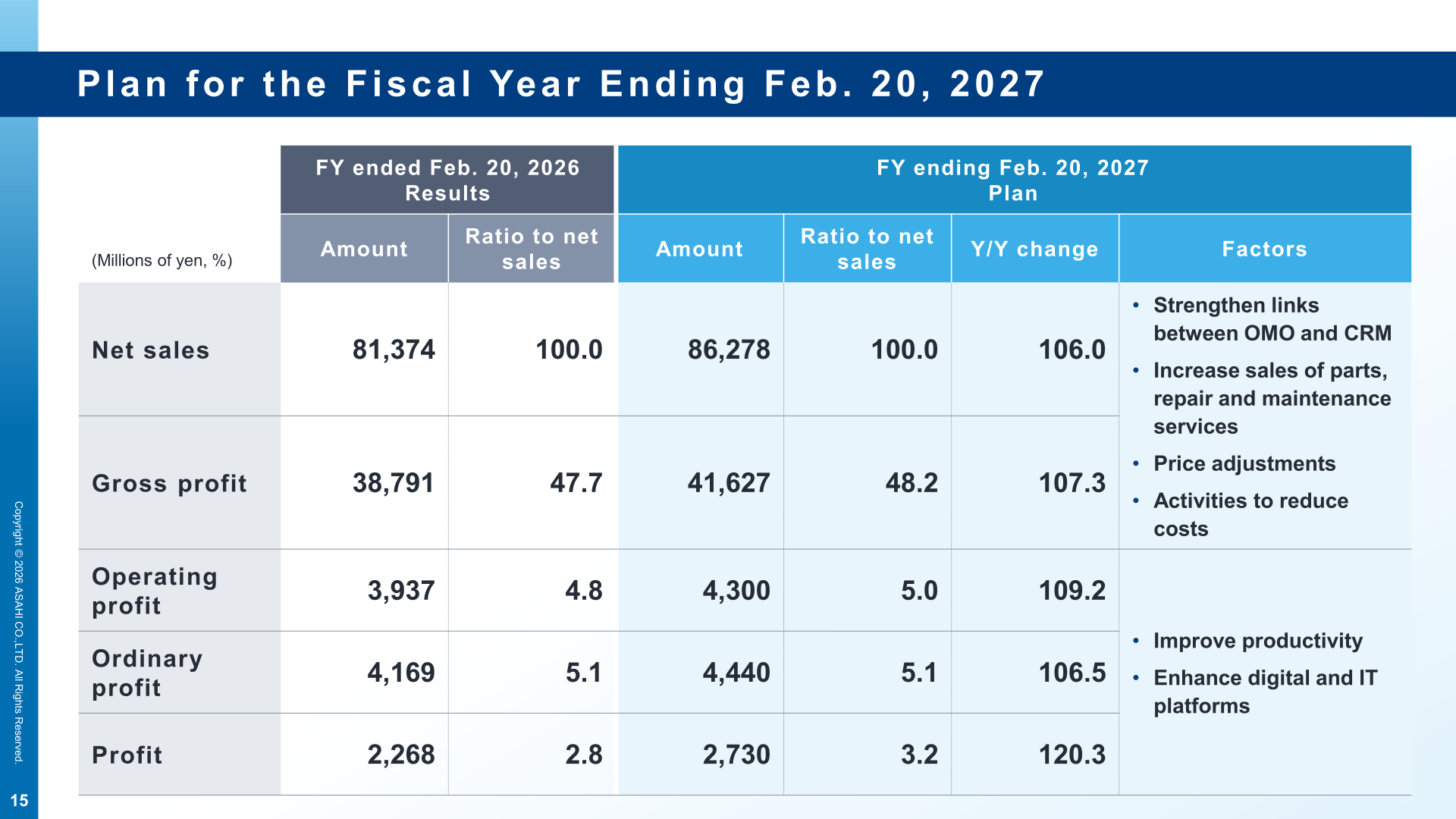
For the fiscal year ending Feb. 20, 2027, the company plans net sales of 86,278 million yen (Y/Y 106.0%), operating profit of 4,300 million yen (Y/Y 109.2%), ordinary profit of 4,440 million yen (Y/Y 106.5%) and profit of 2,730 million yen (Y/Y 120.3%). Planned initiatives include strengthening links between OMO and CRM, increasing sales of parts, repair and maintenance services, price adjustments, cost reduction activities, improving productivity, and enhancing digital and IT platforms.
| Item (millions of yen) | FY ending Feb. 20, 2027 (Plan) | FY ended Feb. 20, 2026 (Results) | Y/Y change (%) |
|---|---|---|---|
| Net sales | 86,278 | 81,374 | 106.0 |
| Gross profit | 41,627 | 38,791 | 107.3 |
| Operating profit | 4,300 | 3,937 | 109.2 |
| Ordinary profit | 4,440 | 4,169 | 106.5 |
| Profit | 2,730 | 2,268 | 120.3 |
The planned operating profit bridge from 3,937 million yen to 4,300 million yen includes 1,500 million yen from the impact of prices, costs and exchange rates (price adjustments, cost reduction, and adverse exchange rate movements), 1,335 million yen from changes in product mix (increase in repairs and parts), and -2,473 million yen from changes in SG&A expenses (wage increase, higher fixed costs from new store openings, and replacement of the core systems).
In the plan’s sales breakdown, stores/e-commerce sales are planned at 82,917 million yen (Y/Y 105.6%), including new bicycle sales of 57,657 million yen (Y/Y 103.8%) and electric-assist bicycles of 25,423 million yen (Y/Y 105.7%); parts/services at 25,260 million yen (Y/Y 109.9%); and peripheral businesses at 3,361 million yen (Y/Y 119.2%). The estimated market share is planned at 26%. SG&A expenses are planned at 37,327 million yen (Y/Y 107.1%), including personnel expenses of 17,859 million yen (Y/Y 107.1%) and transport and storage expenses of 2,484 million yen (Y/Y 114.2%). Capital expenditures are planned at 2,554 million yen (Y/Y 113.3%).
The investment plan aims to accelerate investment in foundations that support future growth (digital and IT platforms, logistics infrastructure, stores). It includes 10 new store openings per year, including 2 urban stores, and the renewal of 16 stores per year and relocation of 1 store per year to revitalize existing stores. The store count is planned to rise from 557 to 567 as of Feb. 20, 2027, with urban stores rising from 14 to 16.
Shareholder Returns
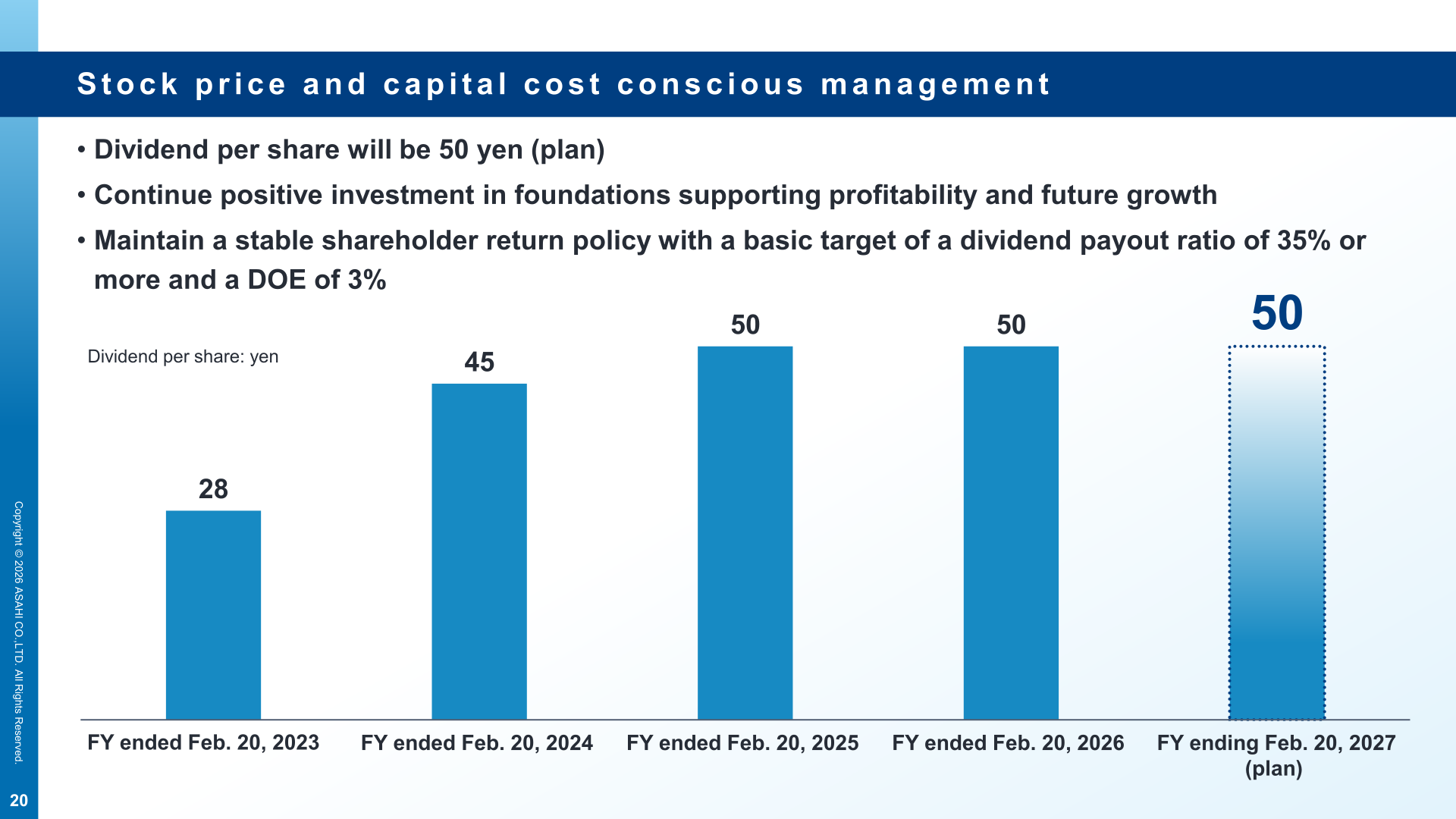
The dividend per share was 50 yen for the fiscal year ended Feb. 20, 2026, the same as the prior year, and the company plans 50 yen for the fiscal year ending Feb. 20, 2027. The dividend per share was 28 yen for the fiscal year ended Feb. 20, 2023 and 45 yen for the fiscal year ended Feb. 20, 2024. Under its stock price and capital cost conscious management, the company will continue positive investment in foundations supporting profitability and future growth, and maintain a stable shareholder return policy with a basic target of a dividend payout ratio of 35% or more and a DOE of 3%.
Medium-Term Management Plan “VISION 2025”
In the final year of “VISION 2025,” the company strengthened its three growth foundations (enhancement and optimization of supply chain management, enhancement of digital and IT platforms, and enhancement of brand management) and refined its SPA business model. As strategies responding to change, it strengthened OMO and CRM, including providing information via the official Cycle Base Asahi smartphone application, and improved profitability other than new bicycle sales. Net sales have grown from 71,398 million yen in the fiscal year ended Feb. 20, 2022 to 81,374 million yen in the fiscal year ended Feb. 20, 2026, a compound annual growth rate of 3.3% over the past four years.
This article is an analysis based on publicly available information and is not a recommendation to buy or sell any specific securities. Investment decisions are your own responsibility.